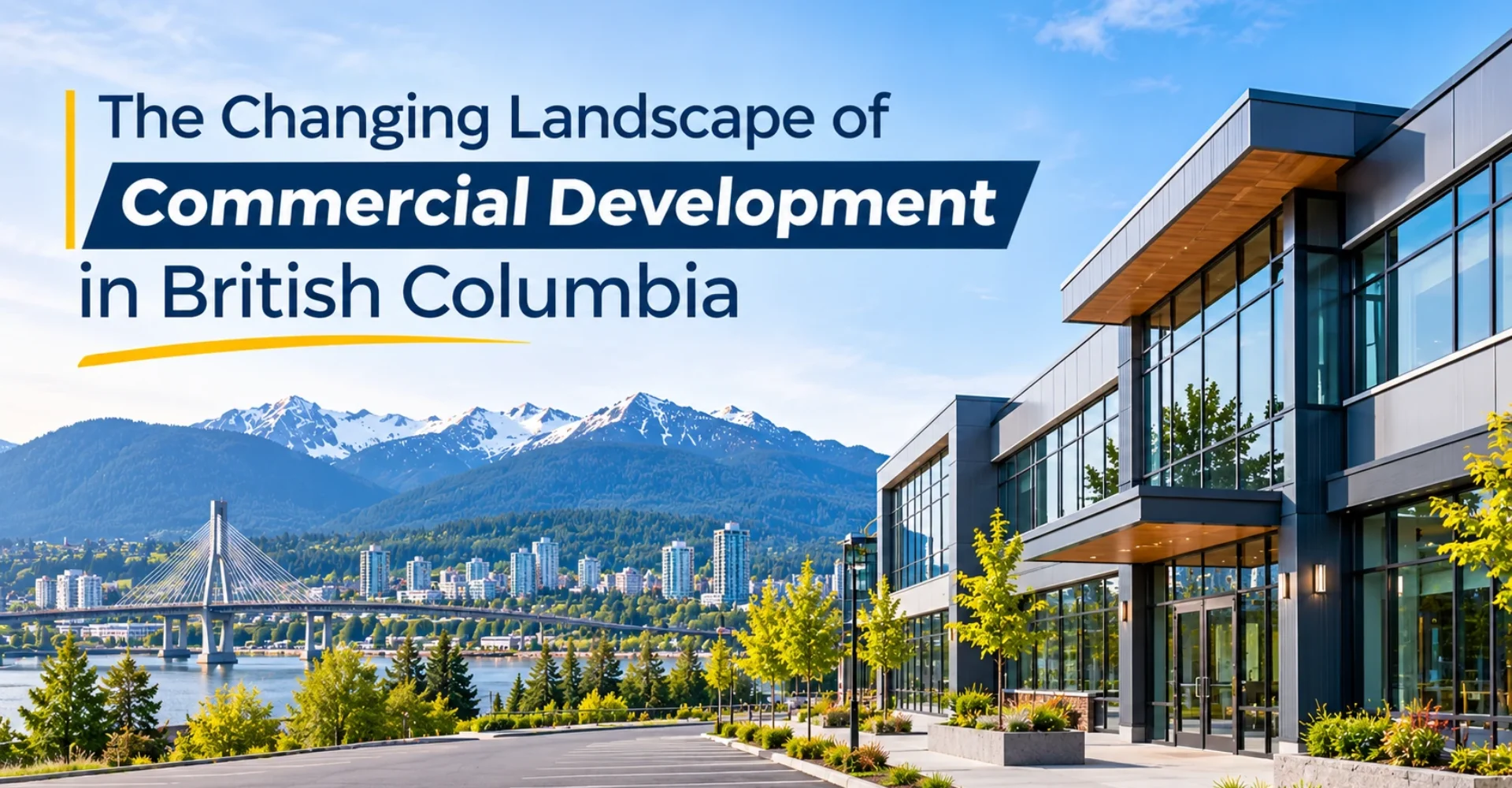
British Columbia’s commercial property market is entering an important phase. Businesses are evaluating new locations, developers are looking at long-term investment opportunities, and demand for industrial, commercial and institutional facilities continues to influence development planning across the province.
However, identifying a suitable piece of land is only the beginning. Turning that land into a functional commercial property requires careful evaluation of zoning, infrastructure, site conditions, project costs and future business requirements.
For investors and businesses, understanding these factors is becoming increasingly important when planning commercial development in British Columbia.
Land selection is one of the most important decisions in any commercial development project.
A property may appear suitable because of its location or size, but its actual development potential depends on several factors. Zoning restrictions, permitted land uses, road access, utility connections, environmental conditions and municipal requirements can all influence what can be built.
Before purchasing or developing a property, businesses should consider:
For a commercial land development British Columbia project, evaluating these details early can help investors make more informed decisions and understand the practical requirements of developing a site.
A promising development opportunity does not automatically translate into a financially viable project.
Construction costs, financing, material availability and approval requirements can influence the overall investment. A project that looks attractive at the initial stage may require significant adjustments once technical and financial considerations are reviewed.
This is why feasibility planning should happen before major commitments are made.
Developers should understand the expected project costs, potential construction challenges, site preparation requirements and the intended use of the finished property.
The British Columbia construction industry continues to have a significant pipeline of proposed projects. The BC Construction Association’s 2026 Spring Stat Pack estimated the value of proposed major construction projects at $173 billion, highlighting the scale of development opportunities across the province.
At the same time, businesses need to evaluate which projects are practical to deliver within their budgets and timelines.
Infrastructure is often one of the most overlooked considerations when evaluating commercial property.
A development site needs more than available land. It may require road improvements, utility extensions, drainage systems, water connections and other infrastructure before construction can move forward.
These requirements can influence project costs and timelines.
For industrial and commercial developments, transportation access is particularly important. Warehouses, distribution facilities and manufacturing properties need suitable connections for deliveries, employees and daily business operations.
A property development company in British Columbia should consider these factors when evaluating a site’s development potential.
Good planning connects the land, infrastructure and intended building use before construction begins.
British Columbia’s non-residential construction sector includes a wide range of projects, from industrial facilities and commercial buildings to healthcare, education and infrastructure developments.
BuildForce Canada’s 2026–2035 outlook expects non-residential construction investment in BC to reach a near-term peak in 2027, supported by major engineering and industrial, commercial and institutional projects.
This creates opportunities for businesses and developers, but it also makes proper project planning important.
Different developments have different requirements:
Industrial facilities: Need suitable site access, loading areas, structural capacity, storage and operational layouts.
Commercial buildings: Require practical floor plans, building systems, customer or employee access and suitable facilities.
Institutional developments: Often involve specialised technical requirements, accessibility and coordination between multiple professional teams.
A successful project begins by understanding these requirements rather than using the same development approach for every building.
Once a development site and project requirements are established, selecting the right construction partner becomes an important decision.
The right commercial construction company British Columbia businesses work with should understand the relationship between planning, design, site conditions, construction methods and project budgets.
Before making a decision, developers should evaluate:
When comparing options for the best construction company in British Columbia, businesses should focus on relevant experience and the ability to manage their particular project requirements rather than relying on general claims.
Property development involves more than constructing a building. It requires decisions that connect land, investment, planning and the intended use of a property.
An experienced property development company in British Columbia should understand how these different areas influence one another.
For example, the location of a commercial property can affect transportation access, workforce availability and customer reach. The building layout can influence operational efficiency, while infrastructure requirements can affect the overall development budget.
A well-planned development considers these factors together.
This is particularly important for investors looking beyond the initial construction stage and considering the long-term usefulness and potential value of a property.
Hilson Development understands that every commercial development begins with a different set of requirements.
The location, site conditions, building purpose and project objectives all influence how a development should be planned and delivered.
By focusing on construction coordination, practical planning and the requirements of each project, Hilson Development aims to help businesses and developers move through the development process with greater clarity.
For clients exploring commercial and industrial opportunities in British Columbia, having a development partner who understands the connection between planning and construction can make an important difference.
A commercial construction company manages the building of properties such as offices, retail spaces, industrial facilities and other business-focused developments. Its responsibilities may include construction planning, contractor coordination, site management and project completion.
Review zoning, permitted land uses, infrastructure, road access, environmental conditions, servicing requirements and potential development costs before purchasing a property.
Commercial land development involves preparing and improving land for business-related uses. This may include site evaluation, planning, servicing, approvals, design and eventual construction of commercial properties.
Look for relevant project experience, commercial construction capabilities, effective project management, clear communication, quality standards and an understanding of local development requirements.
A property development company helps coordinate different stages of a real estate project, which may include land evaluation, feasibility planning, design coordination, construction and project delivery.
Commercial development in British Columbia involves more than finding available land and constructing a building. Successful projects require a clear understanding of site conditions, infrastructure, development requirements, investment considerations and future business needs.
As the province continues to advance major non-residential projects, businesses and investors will need to make informed decisions at every stage.
For developers planning their next commercial or industrial project, working with an experienced construction and development partner can help connect these decisions and keep the overall project objectives in focus.
Hilson Development believes that better commercial development begins with practical planning and a clear understanding of what each project needs to achieve.